Commercial Greenhouse Planning Guide
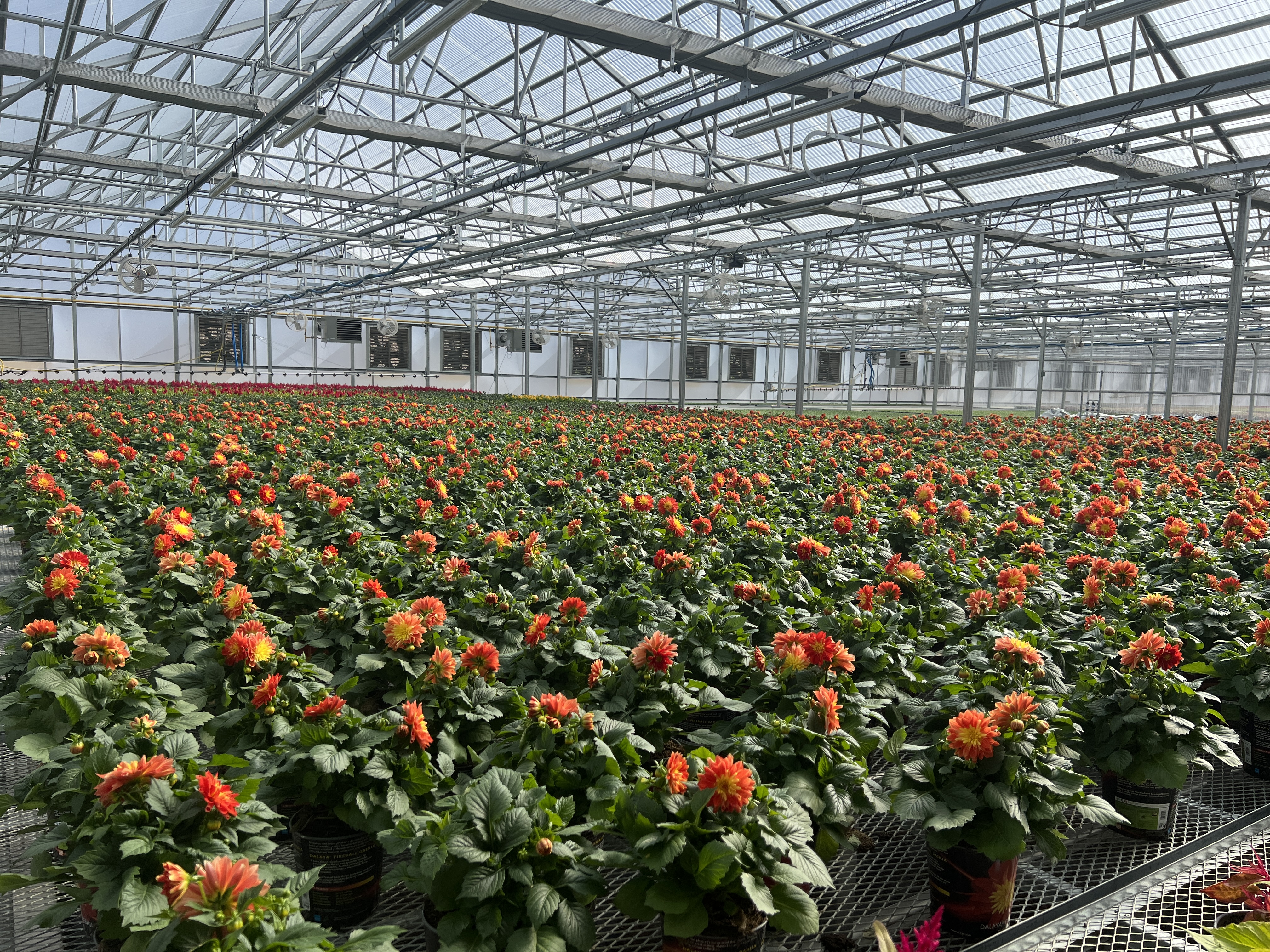
This guide walks through what to expect at each stage of a commercial greenhouse project. Buyers come to us at different points in their planning — some are early in their thinking, some have funding secured and are ready to move, some are mid-project and looking for context on what's coming next. Use the sections below to jump to what's most relevant to where you are.
What you’re actually buying when you buy a commercial greenhouse
A commercial greenhouse is an environmental control system. The structure exists to support equipment that manages temperature, humidity, airflow, light, and water — the conditions your plants need to grow well. This is what makes a commercial greenhouse different from any other building you might buy.
We've been designing and manufacturing these systems for 80 years. In that time, the buyers who've worked with us have ranged from small educational programs putting up their first greenhouse to large commercial operations expanding existing facilities. They've all faced the same set of decisions, in roughly the same order, and we've helped them through it.
Greenhouse projects vary in complexity. A simple structure with passive ventilation and a heater can be installed by a motivated buyer themselves — our structures arrive pre-drilled and pre-cut, essentially as large erector sets ready to be bolted together. More equipped projects — greenhouses with mechanical ventilation, evaporative cooling, environmental controls, and integrated systems — involve more coordination. We work with both kinds of buyers regularly, and the right approach depends on what you're trying to build.
Every decision about the structure connects to decisions about environmental control. Roof shape affects light transmission and snow load. Sidewall height affects ventilation and equipment placement. Covering material affects energy efficiency and light quality. Frame spacing affects what equipment can be installed. These choices shape what you can grow, how efficiently you can grow it, and what your operating costs will look like over the lifespan of the greenhouse.
This is also why the quote for a commercial greenhouse looks different from any other building quote. You're not just buying a structure. You're buying a system specified for your operation in your location — ventilation sized for your climate, heating sized for your coldest expected day, structural elements engineered for your wind and snow loads. The line items reflect components that work together to create the growing environment your operation needs.
The rest of this guide walks through what to expect as your project moves forward — from your first conversation with us, through funding, design, manufacturing, installation, and operation. We've put it together because the buyers who do this well share a common starting point: they understand what they're building and they have a clear partner helping them navigate the project. We can be that partner.
How the first conversation works
When you reach out, the first conversation is mostly about getting our team oriented to your project. The more we understand about what you're building and why, the more useful our guidance will be. You don't need to have everything figured out — most buyers don't when they first contact us. We help you think through the pieces that aren't clear yet.
Here's the kind of thing we'll talk about, so you have a sense of what's coming.
What you’re growing or planning to grow. The crops shape what kind of greenhouse makes sense — different growing programs have different requirements for temperature, humidity, light, and space. If you’re still exploring what you’d grow, that’s a perfectly good starting point. We work with buyers across that whole range, from "we have a specific commercial production plan" to "we’re exploring options for a school horticulture program."
The scale you’re considering. Small educational program, commercial production, research facility, or something else? This shapes everything else — what equipment makes sense, what your timeline looks like, what budget range we’d recommend planning for. Even a rough sense helps us focus the conversation usefully. If you don’t have a clear sense of scale yet, we can help you think through what’s appropriate for your goals.
Where the greenhouse will be located. Climate matters significantly. A greenhouse in Florida needs different equipment than one in Minnesota. Wind load, snow load, and permitting requirements all vary by region. Even if you haven’t picked a specific site yet, knowing your general area helps us recommend appropriately.
Whether you have a site already. If yes, we can talk through your site’s specific constraints — available space, utility access, drainage, vehicle access for delivery. If you’re still looking for a site, we can help you think through what makes a good greenhouse location.
Your timeline. Commercial greenhouse projects typically run 6-18 months from first conversation to operational greenhouse, depending on funding source and complexity. If you have a specific deadline (funding cycles, growing seasons, school year considerations), let us know early. We’ll be honest about what’s realistic given your timeline.
Your budget range. Some buyers prefer to keep budget private to avoid being upsold. We understand that instinct, but a rough range actually helps us recommend appropriately. Without one, we’re guessing about what equipment level makes sense for your project — and we’d rather give you useful guidance than generic recommendations. Even a wide range gets us in the right zone.
Whether you’ve done a greenhouse project before. First-time buyers benefit from a different kind of conversation than experienced operators. If this is new for you, just say so. We’ll provide more context, walk through more of the reasoning behind recommendations, and help you understand the parts that aren’t obvious. You’ll get more help, not less.
Who else is involved in the decision. Single-buyer decisions move differently than committee or institutional decisions. Knowing whether you can commit on your own, or whether board approval, procurement processes, or partners need to be involved, helps us plan realistic timelines together.
What’s driving the project. Why now? Replacement of an existing greenhouse, expansion, new program, specific contract or grant? The reason behind the project shapes what makes sense — a replacement faces different decisions than a first greenhouse for a new venture.
The topics that help most
If you only think about two of these before reaching out, scale and prior experience matter most. A clear sense of scale prevents the conversation from drifting toward the wrong project size. Knowing whether you’ve done this before helps us calibrate where to start.
Everything else can be "we’re still figuring that out" and the conversation will still be productive. The point of the first conversation is to start working through these questions together, not for you to have already answered them.
Funding your project
Most commercial greenhouse projects get funded through some combination of cash, financing, grants, and institutional budgets. Many projects use more than one source — a grant covers the structure, operating funds cover equipment, financing handles expansion later. The right combination depends on your situation, and we're happy to think through it with you.
Cash or operating capital. Common for established operations expanding existing capacity. The fastest path because there's no external approval process.
Equipment financing. Available through agricultural lenders and equipment financing companies. Typically structured as 5-10 year loans against the greenhouse and equipment. Useful when you have credit but want to preserve operating capital for other things.
Grants. Common for educational institutions, research facilities, and some commercial operations. USDA programs, state agricultural programs, education-specific grants, and private foundation funding all exist. Grant timelines vary — anywhere from 3-12 months to secure, sometimes longer depending on the program.
Institutional procurement. Schools, universities, government agencies, and nonprofits typically fund through their organization's standard procurement process. This usually involves board approval, budget cycles, and sometimes bidding requirements. Plan for 2-6 months of institutional process even after the funding decision is made.
Many projects combine sources. A grant covers the structure, operating funds cover equipment, financing handles expansion later. Knowing what combination works for your situation often takes conversations with both your financial advisors and the manufacturer.
Sizing your funding request
The structure cost is the part the configurator handles directly — real pricing for the specific configuration you choose, available immediately. But a complete project includes costs beyond the structure: foundation work, utility connections, installation labor if you're not having us install, permitting fees, site preparation. The total project cost is meaningfully higher than the structure alone.
When sizing your funding request, plan for both the structure cost from the configurator and the additional project costs you'll arrange separately. The configurator gives you a concrete number for the structure. The other costs depend on your specific site, contractor rates, and local conditions.
If you'd like help thinking through what your specific project might require beyond the structure cost, our team can walk through that with you. We've seen enough projects across different regions and site conditions to help you build a realistic working budget.
Productive work to do while funding develops
Securing funding takes time, especially for grant-funded and institutional projects. The good news is there's productive work you can do in parallel rather than waiting passively. Buyers who use the funding period well can move significantly faster when funding lands.
Talk to your local building authority about permitting. This is free and doesn't commit you to anything. Permitting requirements and timelines vary significantly by jurisdiction, so knowing what's required before you have funding lets you account for it in your overall schedule. If you want help thinking through what to ask, let us know — we've seen enough variation across jurisdictions to point you toward the right questions.
Identify potential sites and assess constraints. Available space, utility access, drainage, vehicle access for delivery, sun exposure. The more site work you've done before funding arrives, the faster you can move once you have it.
Get specific pricing for your project. The configurator produces real pricing for specific configurations in minutes. Knowing the actual cost of what you want to build helps you size your funding request accurately and shows funding sources that you've done your homework.
Check engineering requirements early. Some jurisdictions require stamped engineering drawings, some insurance companies require them, and structures with public access typically need them. Some of our structure series can be engineered to meet these requirements while others can't. If you'll need stamped drawings, knowing early helps you choose the right structure series for your project — your sales rep can guide you toward options that work for your specific situation.
Buyers who do this work in parallel with funding don't lose time. When the funding decision comes through, they're ready to move forward immediately.
If you'd like help thinking through total project costs for a funding request, our team can walk through your specific situation. Talk to our team →
Who’s coordinating the project
A commercial greenhouse project involves multiple parties — manufacturers, installation crews, foundation and utility contractors, sometimes engineers, sometimes your municipality, sometimes your insurance company. Someone needs to keep all of these moving in the right direction. That role matters more than most buyers realize when they start.
In our experience, the buyers who navigate projects most smoothly are the ones who decided early who's playing that coordination role. The buyers who run into trouble are usually the ones who never made the decision consciously and ended up coordinating by default — often discovering halfway through the project that they're spending more time on logistics than they expected.
There are a few approaches that work, and the right one depends on your situation.
You coordinate it yourself. This works well for buyers with project management experience or operations that have done similar projects before. You're the central point of contact for all parties, you keep the schedule, you make tradeoff decisions. The advantage is direct control. The cost is the time it takes — managing a greenhouse project alongside running your operation is real work.
Your facilities team coordinates it. Common for institutional buyers — schools, universities, research facilities, government operations. Facilities staff have experience coordinating construction projects, understand institutional procurement processes, and can dedicate time to project management. This is often the smoothest path for institutional buyers.
You hire a general contractor or project manager. This adds cost but adds capacity. A contractor experienced with greenhouse projects can handle coordination across all the parties involved. Be specific about greenhouse experience when you're hiring — coordinating a greenhouse project isn't the same as coordinating other construction, and not all contractors who say yes actually have the relevant experience.
Making the decision deliberately
Whatever approach you choose, the important thing is making the choice consciously rather than discovering halfway through that you're the project manager by default. Some specific questions worth asking yourself:
How much time can you realistically spend on project coordination over the next 6-18 months? If the answer is "not much," that points toward hiring help or relying more on institutional support.
Have you coordinated construction projects before? If not, the learning curve is real. Greenhouse projects compress that learning curve because of their complexity — first-time project managers often discover they need help midway through.
Who else in your organization could play this role? Sometimes the buyer assumes they'll handle it when there's actually a facilities manager, operations director, or other team member who's better suited.
Our team works closely with buyers throughout the project regardless of which approach you choose. Whether you're coordinating yourself, working with your facilities team, or using an outside project manager, we're involved in the decisions that affect the structure and equipment. The more communication during the project, the smoother it tends to go.
The pricing process
Most commercial greenhouse manufacturers handle pricing the same way: you reach out, share information about your project, wait for a custom quote to come back, then schedule a call to walk through it. The wait between request and quote typically runs days to weeks, sometimes longer for complex projects.
We do it differently, and the difference is intentional.
Real pricing in minutes through the configurator
The configurator on this site lets you spec out your greenhouse and see real pricing immediately — not a range, not an estimate, but actual pricing for the specific configuration you choose. Structure, equipment, options, all priced in real time as you build out your project.
This matters for a few reasons. You can explore options without committing to a sales conversation — see what changes when you adjust size, equipment level, or covering type. You can size your project to your budget by adjusting variables until you land somewhere realistic. You can put together preliminary numbers for grant applications, board presentations, or internal planning without waiting for a quote cycle. And when you do connect with our team, the conversation starts from real numbers you’ve already explored rather than from scratch.
We made this choice — publishing real pricing transparently — because it serves buyers better. The traditional model where pricing is hidden behind sales conversations works for manufacturers more than buyers. Buyers waste weeks waiting for quotes they could have generated themselves. They have less control over the planning process. They sometimes commit to manufacturers without truly knowing what alternatives cost.
Where the configurator fits in your project
For most buyers, the configurator is the right starting point. Use it to develop a sense of what your project actually costs before you reach out. Adjust the specs to see how different choices affect price. Get familiar with the equipment options and what they do.
When you’re ready to talk through your project, the configurator output gives both of us a concrete starting point. We can discuss specific configurations rather than abstract possibilities. We can address your specific questions about why certain equipment is recommended for your situation. The conversation is faster and more useful because we’re working from real numbers.
Custom quotes when the configurator isn’t enough
Some projects involve elements the configurator doesn’t handle — unusual sizes, specific code compliance requirements, complex equipment integrations, gutter-connected configurations, custom modifications. For those, we provide traditional custom quotes after a conversation about your specific needs.
When this is the path your project takes, our process is straightforward. We walk through your project requirements together. We put together a quote that reflects your specific situation. We then schedule a call to walk through the quote line by line, so you understand what each component does and why it’s recommended for your project before you decide anything.
What to expect from any quote
Whether your quote comes from the configurator or from a custom quoting conversation, it'll include more line items than buyers expect their first time through. That's not because we're padding it — it's because a commercial greenhouse is a system, not a single building, and each component shows up explicitly. The quote breakdown helps you understand exactly what you're paying for and what each piece does.
The configurator and cost guides on this site explain individual equipment categories in detail. If you see a line item you're not sure about, those pages walk through what the equipment does, why it's typically recommended, and how it affects your operation. When in doubt, ask — we'd rather you understand the quote fully than commit to something you're unsure about.
Ready to see real pricing for your project?
The configurator gives you actual numbers for your specific configuration in minutes.
What’s in the quote and what isn’t
A commercial greenhouse quote covers the structure and equipment we provide, but a complete project involves work beyond what's on our quote. Understanding what's included and what you'll need to arrange separately helps you plan accurately from the start.
What’s typically on the Conley’s quote
The structure itself — frame, covering, doors, hardware. The equipment you've selected — ventilation systems, heating, evaporative cooling, shade systems, benches, controls, whatever your project includes. Freight to your site. Installation if you've chosen to have us install. Engineering drawings when your project requires them.
The quote breaks each of these out as line items so you can see exactly what you're paying for. If you've selected specific equipment categories, each one shows up explicitly with its components and pricing. This level of detail helps you understand the project and gives you flexibility — if a particular equipment category is outside your budget for this phase, you can see exactly what removing it changes.
What’s typically not on the Conley’s quote
Several project components are typically handled separately from your manufacturer quote:
Foundation work. Most commercial greenhouses sit on a concrete perimeter foundation or piers. Your foundation contractor handles this based on the foundation drawings we provide.
Utility connections. Electrical service to the greenhouse, water lines, gas lines if you're using gas heat. These are handled by local electricians, plumbers, and utility contractors familiar with your site and local code.
Site preparation. Grading, drainage, vehicle access, anything needed to prepare your site for delivery and installation.
Installation labor when you're not having us install. If you're handling installation yourself or hiring a contractor, the labor cost for assembling the greenhouse isn't on our quote. This is a significant project cost worth planning for explicitly — greenhouse installation involves specialized work even when the structure arrives pre-drilled and ready to assemble.
Permitting fees. Whatever your local jurisdiction charges for permits and inspections.
Insurance and bonding. If your project requires construction insurance or bonding, those costs are separate.
Planning for total project cost
The total cost of a complete project depends significantly on your specific situation — distance from existing utilities, soil conditions, local labor rates, jurisdiction-specific requirements, and which installation approach you choose. The structure cost is one part of the picture, but planning for the full project means accounting for the work beyond the manufacturer's quote.
If you'd like help thinking through what your specific situation might involve, that's something our team can walk through with you. We can give you a sense of what to expect based on similar projects we've seen, even though final costs depend on your contractors and local conditions.
What’s outside the project scope entirely
A few things are part of operating a successful greenhouse but aren't part of the construction project itself: growing media, plants and seeds, ongoing operating supplies, staff training, climate management strategy, crop-specific guidance. These don't fit on a project quote because they're operational costs, not construction costs. They're worth knowing exist as you plan your overall startup.
For operational questions specifically, your best resources beyond Conley's are agricultural extension services, industry associations, and other growers in your area. We're focused on the structure and equipment — getting your greenhouse built and equipped well — but successful operation involves expertise we don't claim to provide.
Permitting
Permitting varies more than buyers expect. Most commercial greenhouses qualify as agricultural structures in their jurisdiction, which often simplifies the process — agricultural classifications frequently don't require stamped engineering drawings or the same level of inspection as commercial buildings. But this varies significantly by municipality, by intended use, and sometimes by insurance company requirements.
A greenhouse for commercial production might need only basic agricultural permits. A school greenhouse where students will be present often requires more rigorous permitting. A greenhouse in a hurricane zone might need stamped drawings showing specific wind load capacity. A greenhouse with public access — retail garden centers, agritourism operations — may be classified differently than production-only greenhouses. None of these are universal rules. They’re patterns that play out differently depending on where you’re building and what you’re building for.
Start with your local building authority
The most useful thing you can do early — before you finalize your design — is contact your local municipality and ask about their requirements for your specific situation. This is free and doesn't commit you to anything. The questions worth asking include:
What classification does a commercial greenhouse fall under in this jurisdiction? Agricultural, commercial, or something else?
What permits are required for this classification, and what's the typical timeline for approval?
Do you require stamped engineering drawings, or are manufacturer-provided drawings sufficient?
Are there specific structural requirements for this region — wind load, snow load, seismic — that need to be documented?
If the greenhouse will have public access or students present, does that change the classification or requirements?
Getting clear answers early prevents the most common permitting problems we see, which is buyers discovering specific requirements partway through the project when they could have planned for them upfront.
Engineering drawings and structure compatibility
Some projects need stamped engineering drawings — required by certain municipalities, certain insurance companies, and most structures with public access. Some of our structure series can be engineered to meet these requirements while others can't.
If your situation requires stamped drawings, this affects which structure series make sense for your project. Knowing this upfront helps you choose appropriately before you've gotten too far into planning around a series that won't work for your permitting needs.
If you're not sure whether your project requires engineering, ask your local building authority and your insurance company. Both can have requirements that affect the answer. Your sales rep can help you understand which series options work once you know what's required.
Planning permitting alongside other work
Permitting timelines vary from a few weeks to several months depending on jurisdiction. Slow jurisdictions can extend your overall project timeline significantly if you wait to start permitting until other planning is complete.
The buyers who navigate permitting smoothly tend to handle it in parallel with their other planning work — starting the municipality conversation while still developing their design, submitting applications while finalizing equipment selections, getting inspections scheduled during the manufacturing phase. This compresses your overall timeline by ensuring permitting doesn't become the bottleneck that delays installation.
If permitting is unfamiliar territory for you, that's normal — most first-time buyers haven't navigated commercial construction permits before. Our team can help you think through what to ask your municipality and how to interpret what they tell you. We've seen enough variation across jurisdictions to point you toward the right questions.
From quote to install
Project journey
Eight phases from first conversation to operation. Select a phase to jump to that part of the guide.
Typical project timeline varies by project type, funding source, and complexity.
Once you've approved your quote and submitted a purchase order, the project moves through several phases before your greenhouse is operational. Understanding the sequence and typical timelines helps you plan effectively and reduces the anxiety that comes from not knowing what's happening behind the scenes.
Order entry
After your PO is received, the order moves into our engineering team. For projects that require stamped engineering drawings, engineering develops the project-specific drawings. For other projects, engineering reviews the order and finalizes the bill of materials.
Engineering review
This phase takes time — typically a few weeks for engineered projects, less for projects that don't require stamped drawings. We'll communicate with you when this phase is complete and the project is ready to move into manufacturing.
Manufacturing
Once engineering clears the order, manufacturing begins. Manufacturing duration depends significantly on the size and complexity of your project plus our current production schedule. Smaller projects can move through manufacturing faster than larger or more equipped ones. Your sales rep will give you a specific estimate based on your project and the current production queue.
This is the phase that surprises buyers most because it's often longer than other purchases involve. The reason is that your greenhouse is being built specifically for your project — components are being fabricated, quality-checked, and prepared for shipping. Unlike consumer purchases where products come from existing inventory, commercial greenhouses are made to order.
During manufacturing, communication is typically less frequent than during the planning and quoting phases. Your structure is being built — there's less to discuss day-to-day until it's ready to ship. If you have questions during this phase, your sales rep is your primary contact.
Shipping and delivery
Once manufacturing is complete, your structure ships to your site. Freight is included on your quote, and we coordinate with the freight carrier to schedule delivery. Most commercial greenhouse shipments arrive on multiple trucks given the size and weight of the materials.
When delivery is scheduled, plan for someone to be on-site to receive the shipment. The driver will need direction about where to place the materials, and you'll want to verify the shipment against the packing list as it arrives.
Inventory and any missing parts
After delivery, take inventory of everything that arrived within two weeks. Compare what's on-site against the packing list and note anything missing or damaged. We require this inventory window because if anything is missing or damaged in transit, we want to ship replacements quickly rather than discovering the issue when you're mid-installation.
If something's missing, contact your sales rep with the specifics. We'll review and ship any missing or damaged parts as quickly as possible.
Installation
Installation timing depends on your chosen approach. If we're installing, our crew arrives based on schedule coordination after your inventory is complete and your site is ready. If you're using your own contractor or doing the work yourself, you coordinate the timing.
The structure assembly itself typically takes a week or two for most commercial sizes, sometimes longer for larger or more complex projects. Equipment installation and commissioning adds additional time depending on what’s included.
If questions come up during installation — and they often do, especially on first-time projects — our engineering team can answer technical questions. Your sales rep coordinates this support and helps resolve any issues that emerge.
The institutional timing reality
For institutional buyers (schools, universities, government agencies, larger nonprofits), the timeline between quote approval and PO can be longer than expected — sometimes 2-3 months for board approval, procurement processing, and contract finalization. This is normal and worth planning for. If your organization has specific procurement requirements (W-9, certificate of insurance, specific contract language), surfacing those early in the quoting process prevents delays at the PO stage.
Planning for the full timeline
The complete project timeline from PO to operational greenhouse depends on several factors: whether your project requires engineering review, the size and complexity of manufacturing, shipping and delivery scheduling, your inventory window, and installation timing. Each phase takes time, and they happen sequentially.
For institutional buyers, add the procurement timeline before manufacturing even begins — board approval, contract finalization, and PO processing can extend the front of the project by months.
If this overall timeline is longer than you expected, that's a common reaction — commercial greenhouse projects move at construction timelines rather than consumer purchase timelines. Planning for the full sequence prevents surprises and gives you realistic expectations to share with anyone depending on your project schedule.
Your sales rep will give you a specific timeline estimate based on your project, its requirements, and our current production queue.
After installation
Once your greenhouse is built and equipped, the relationship with Conley's continues, though the nature of contact typically changes.
During the first few months
The first months of operation are when most equipment questions surface. Buyers often have questions about how to operate specific systems — proper settings for environmental controls, maintenance schedules for evaporative cooling pads, calibration of automated systems. Your sales rep is the right contact for these questions, and they'll involve our engineering team when technical detail is needed.
This is also when any installation issues that weren't caught immediately tend to appear. If something isn't working the way it should, contact us. Most issues are quickly resolved once we understand what's happening.
Warranty support
Equipment we provide carries manufacturer warranties — coverage varies by equipment type and manufacturer. If something fails under warranty, reach out to your sales rep with the specifics. We coordinate the replacement process with the equipment vendor.
Maintenance questions
Greenhouse equipment requires ongoing maintenance to perform reliably — keeping evaporative cooling pads clean, lubricating fan motors, replacing covering material as it ages, checking structural connections. We can answer maintenance questions about the equipment we provide and point you toward best practices.
For maintenance practices specific to your operation — how often you need to clean pads given your water source, what your specific climate means for covering lifespan — your direct experience over time will be the best guide. We can give you starting points based on what we see across operations, but your specific situation will inform the details.
Expansion and additions
The most common reason buyers reach back to Conley's after the first year is to expand or add to their original project. Adding lighting they didn't initially budget for. Adding benches as their operation grows. Considering a second greenhouse. Adding equipment they decided to defer in the original project.
These conversations work similarly to your original project — we can quote additions, expansions, or modifications through our normal process. Buyers who've already worked with us once typically move through this faster because we know your operation and you know our process.
What’s outside our scope
A few things are important parts of greenhouse operation but aren’t areas where we provide guidance: crop-specific growing strategies, pest and disease management, soil and growing media selection, climate management strategy beyond what equipment provides, business operations and marketing.
For these, your best resources are agricultural extension services, industry associations specific to what you're growing, university agriculture programs, and other growers in your area. Each of these communities has expertise built around growing specifically rather than around the structures and equipment we provide.
Ready to start your project?
Wherever you are in your planning process, there's a useful next step:
If you're early in your thinking, the configurator gives you real pricing for specific configurations in minutes. Explore different sizes, equipment levels, and options. Get a concrete sense of what your project might cost before committing to conversations.
If you have a sense of what you want, reach out to our team. Whether you have a fully specified project or just a general idea, the conversation will help you move forward with clarity.
If you're working on funding, the configurator output gives you real pricing for grant applications, board presentations, and budget planning. Our team is also happy to help you think through total project costs for funding requests.
If you're ready to move forward, request a quote and we'll work with you through the full process — from final design decisions through manufacturing, delivery, and installation.