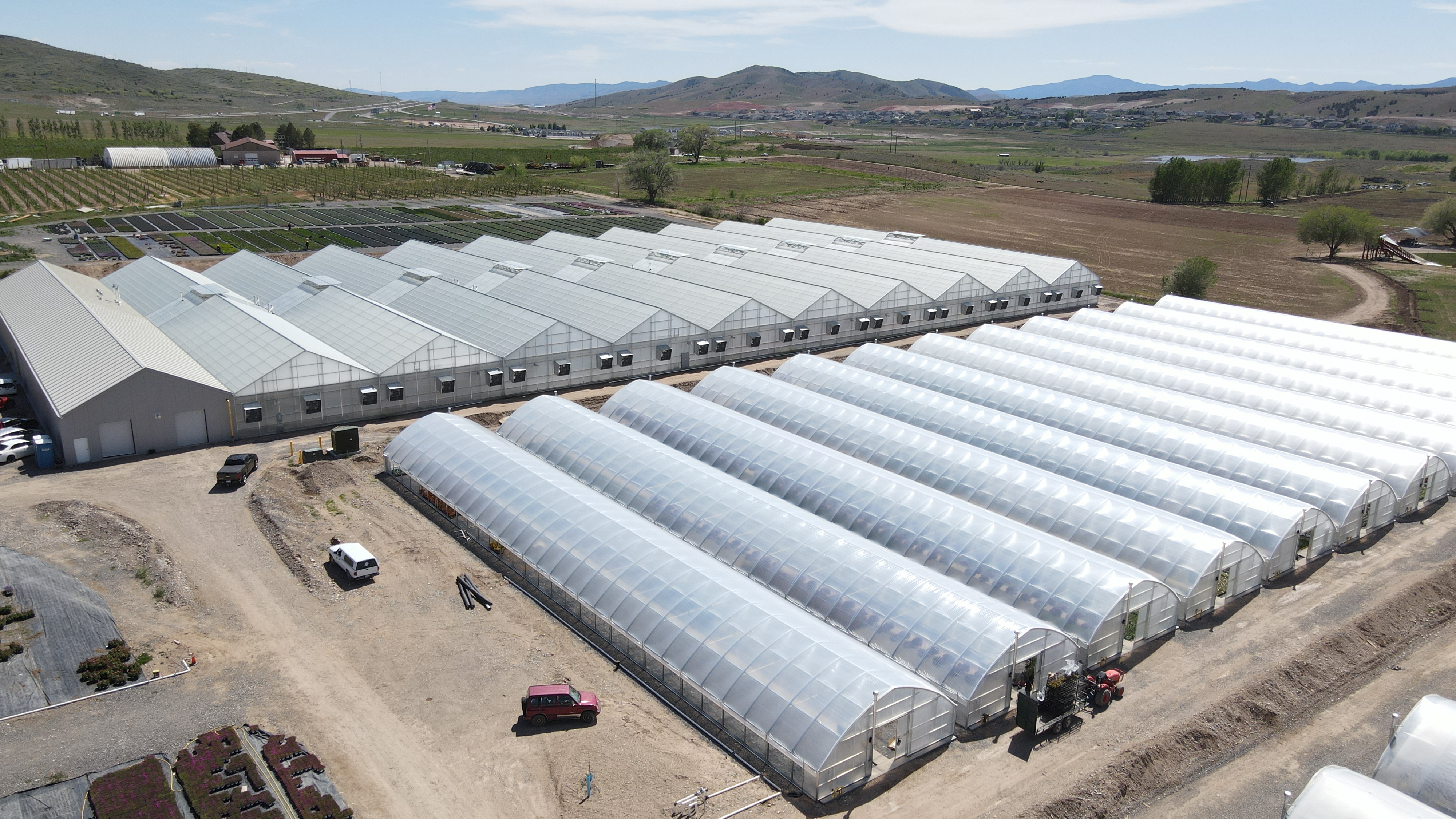
Commercial Production
When you're growing for revenue, the structure is an investment you're running numbers on. We build production greenhouses for growers who think that way — and let you put a real structure cost into your ROI model today instead of waiting weeks for a quote.
How commercial growers evaluate a greenhouse
Three levers most commercial buyers weigh — general industry patterns, not Conley's performance promises.
Energy
Covering, venting, and screens drive heating and cooling load. Energy is often cited in roughly the 20–40% range of operating cost for controlled-environment agriculture.
Labor
Layout and workflow from planting through shipping shape labor as much as crop choice. Structure and bench layout should match the process you are building toward.
Revenue timing
Year-round production and harvest timing when field supply peaks can shift revenue from seasonal to steady — the structure and climate package determine how much of the calendar you can run.
Freestanding or gutter-connected?
Pick the model closest to your operation — crop mix, expansion plan, and how you run climate all follow from here.
Gutter-connected range
Linked bays with shared climate control — more efficient per square foot at scale. Best for one crop, or compatible crops, at volume.
Freestanding houses
Separate environments per house — easier phased growth and better when crops need different climates or you expand one house at a time.
What that choice means
Gutter-connected range
One high-value crop at scale often leans here.
Shared climate volume
Linked bays condition more efficiently per square foot than the same area as separate houses.
Expand by adding bays
Plan utilities and circulation for the range you might build in five years, even if you price one bay today.
Where Conley's fits
Real structure pricing from the configurator — plus cost guides and a planning guide for the full project picture.
7500 Series cost guide
Live-priced 7500 builds including a commercial production house.
Commercial greenhouse cost overview
How structure, equipment, and climate drive materials cost.
Commercial greenhouse planning guide
Site, permits, utilities, and phased expansion.
Wide-bay gothic gutter-connected — wholesale and bedding-plant production at scale.
Gothic arch, strong ventilation — high-volume production on a tighter budget.
Gable series for engineered loads, automation, and premium commercial programs.
Cold-frame tier for season extension and hardening-off.
Match series to crop and expansion plan, then price in the configurator — your rep helps stress-test operating assumptions beyond structure cost.
Common questions from commercial growers
How much land do I need?
Many commercial master plans assume roughly two acres or more for the greenhouse footprint plus outdoor production, access, and room to expand — general planning guidance, not a Conley's requirement. Local zoning and crop type change the answer; see our planning guide for site detail.
What covering is best for my crop and climate?
Think total cost of ownership: poly film is often lowest upfront; polycarbonate balances insulation and durability in cold climates. Price structure and equipment in the configurator, then stress-test operating assumptions with your rep.
Can I start smaller and expand?
Yes — gutter-connected ranges add bays; freestanding sites add houses. Plan utilities and drainage for the layout you might build in five years even if you only build one bay or house now.
What series fits high-volume production?
6500 for wide-bay gutter-connected wholesale; 3600 for high-volume gothic on budget; 7500 for engineered loads and automation; 1200 for season extension. Match series to crop and expansion plan, then price in the configurator.
Put a real structure cost in your ROI model
Configure dimensions and equipment for a production greenhouse — materials pricing updates live so you can run payback math without waiting on a quote.