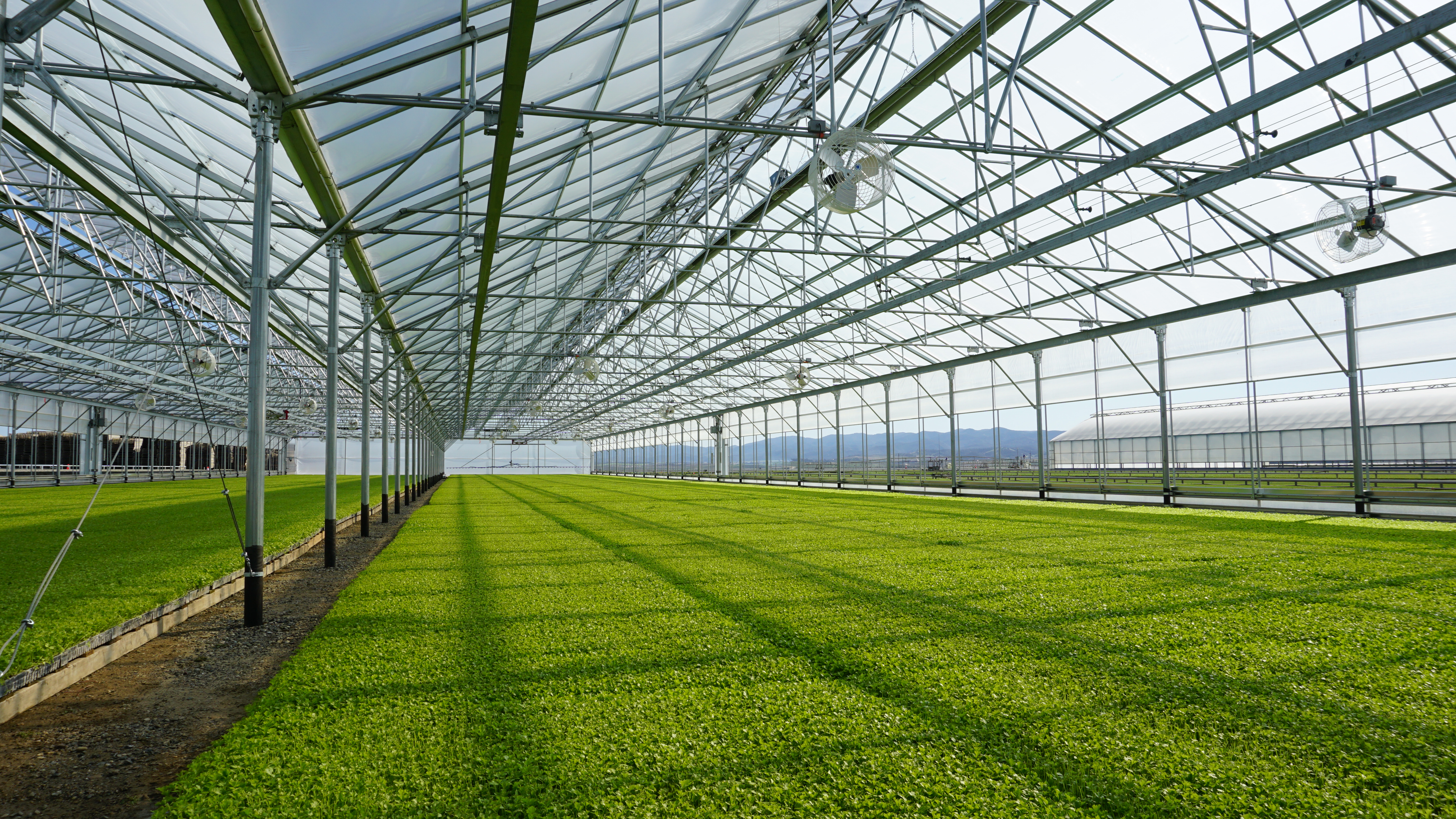
Propagation & Young Plants
Every finished crop depends on the quality of the young plants it started from — compromised propagation compromises the whole crop. Propagation is the most environmentally demanding work you'll do in a greenhouse, which makes the structure and its environmental control a precision instrument, not just shelter.
Separate houses or one zoned structure?
Propagation runs through distinct environments — germination, rooting, and growing-on each need different setpoints. How you house those stages drives layout and control.
Separate houses per stage
Propagation, rooting, and growing-on each get their own structure with independent setpoints. Scales by adding houses; suits operations that run stages on different schedules.
One house, compartmentalized
Distinct zones under one roof — shared utilities, separate environmental control per zone. Suits mid-scale dedicated liner operations that want one addressable footprint.
The propagation sequence
Separate houses per stage
Each stage gets its own structure — setpoints do not compromise each other.
Germination / sticking
Warmth, high moisture, and high humidity for seed germination and sticking cuttings.
Rooting
Bench-level heat plus mist or fog at high humidity until roots form — root-zone warmth without heating the full air volume.
Weaning / growing-on
Mist frequency reduced, humidity lowered, airflow increased to harden compact, transplant-ready liners before they move to finish production.
Structure and environmental control
Propagation is where structure and environmental equipment matter most. Price frame, ventilation, unit heat, shade, and benches in the configurator. Mist, fog, bench heat, and supplemental lighting are integration points your rep helps spec.
Commercial production
Growing your own starts inside a vegetable or floriculture operation.
Nurseries & garden centers
Garden centers and nurseries propagating their own perennials or stock.
Growing benches
Bench layouts for propagation density, airflow, and ergonomics.
Mechanical ventilation (HAF)
Powered airflow for uniform conditions in high-density young-plant environments.
Gable series for engineered loads, compartmentalized zones, and automation-friendly propagation.
Gothic arch propagation ranges — strong ventilation at production volume.
Stamped-engineering gothic line when permits and code documentation matter.
Cold-frame tier for hardening-off and seasonal propagation — not primary year-round liner production.
Your rep matches series to crop, stages, and expansion plan. The configurator prices listed series and core equipment now.
Common questions from propagation growers
Do I need bottom heat, or is heating the greenhouse enough?
Root development follows root-zone temperature — for many crops, targets around 72–75°F are common in industry literature. Heating the bench is usually more cost-effective than heating the entire air volume. Unit heaters in the configurator address house heat; bench heat is a separate integration your rep helps spec.
How do I keep humidity high enough for cuttings?
Propagation houses often target 85%+ relative humidity via intermittent mist or fog on unrooted cuttings — reducing the leaf-to-air vapor pressure gradient so leaves do not desiccate before roots form. Mist and fog systems are spec'd with your rep; structure tightness and ventilation strategy affect how well you hold humidity.
Should propagation be a separate house from growing-on?
Often yes at scale — rooting wants high humidity and bench heat while growing-on needs lower humidity and more airflow to harden liners. Separate houses give independent setpoints; a compartmentalized house can run both if zones are isolated. Your crop mix and volume determine which layout fits.
How do I control disease in high-density young plants?
Airflow, sanitation, and clean surfaces matter as much as setpoints. Increase circulation after germination to harden plants; concrete floors and bench hygiene reduce algae and fungus pressure. HAF fans and ventilation layout are configurable here — crop protocols and scouting are yours or your consultant's.
Price a propagation greenhouse
Configure structure dimensions and the ventilation, heat, shade, and bench systems you can price live — your rep helps spec mist, bench heat, and lighting integration for your stages.